
Application
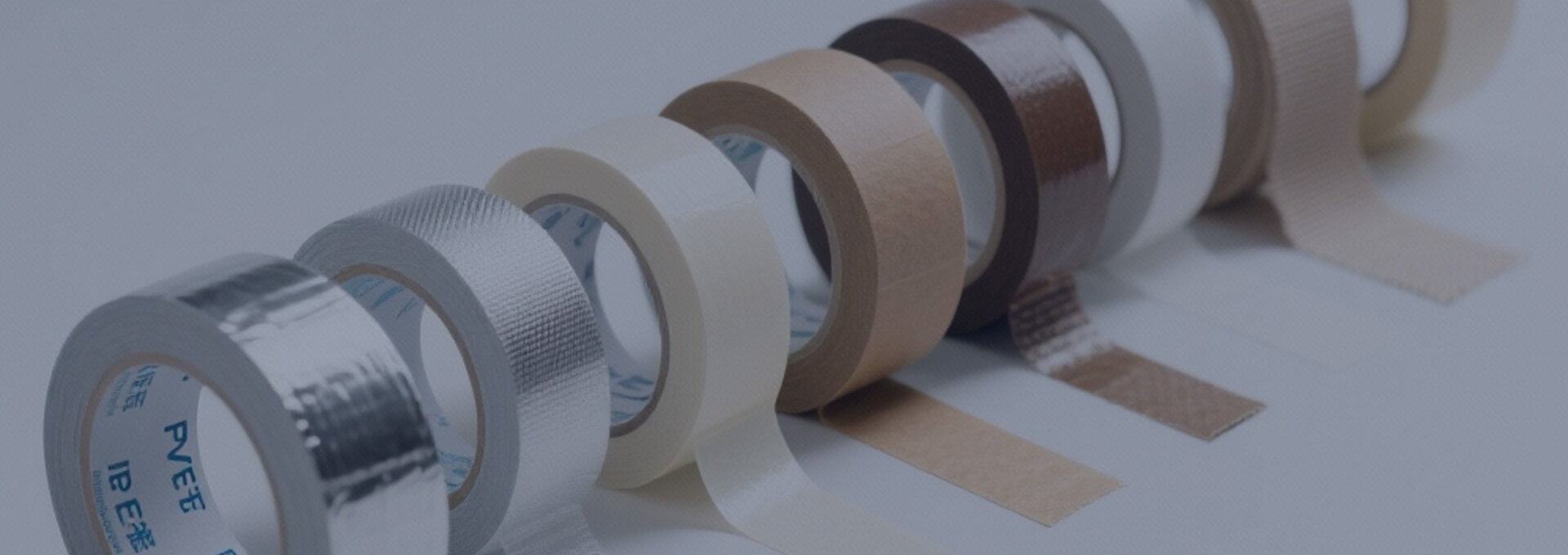
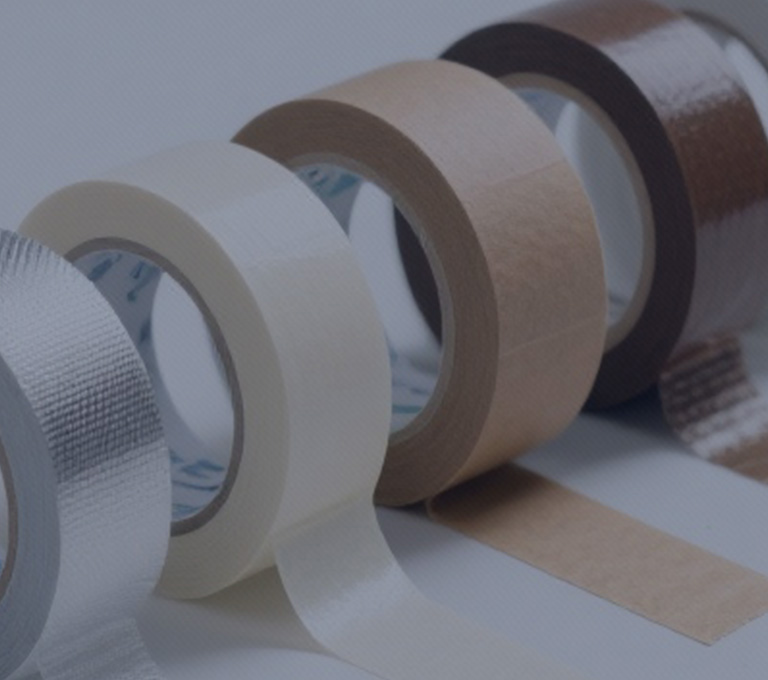
Spray Masking
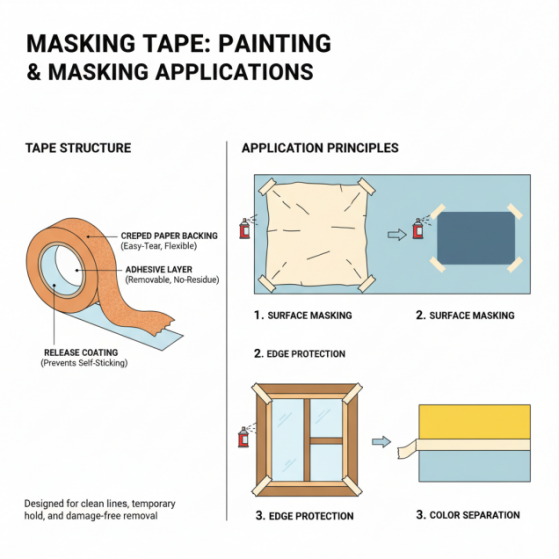
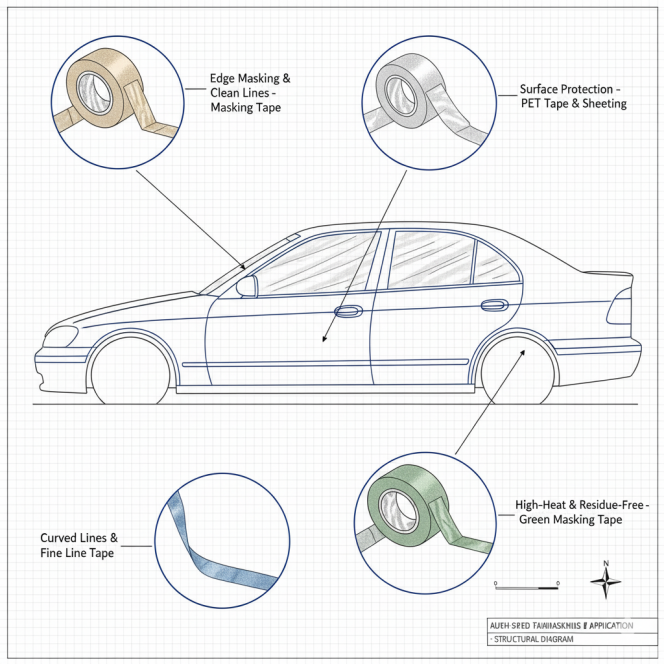
Tape is a simple, efficient, and low-cost material used in spray masking to create a physical barrier and achieve sharp paint lines. It can be easily removed after spraying without affecting the appearance of the substrate.
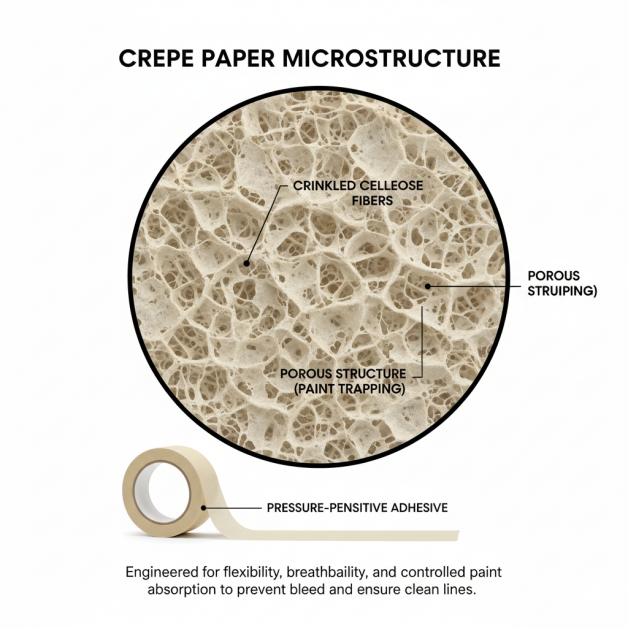
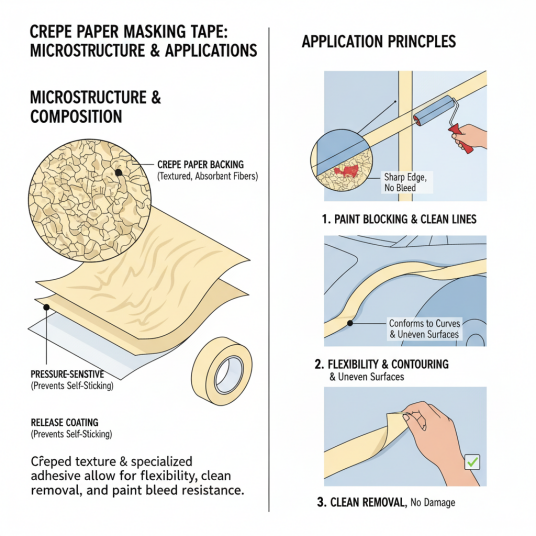
Made from randomly interwoven cellulose fibers, masking tape forms a porous and compressible mesh structure. This gives it excellent flexibility and the ability to conform to curved surfaces. After surface treatment, it resists bleeding with most paints and inks (both oil-based and water-based). The breathable microporous structure allows the coated adhesive to penetrate the paper base, creating an anchoring effect. As a result, when removed, the adhesive tends to bond more strongly with the masking paper, preventing residue on the substrate and ensuring a perfect paint finish. Due to its low cost, masking tape is widely used in various spray masking applications, such as defining paint boundaries in automotive painting, and delimiting surfaces for painting furniture and walls in the home decoration industry, as well as protecting adjacent materials during paint spraying.
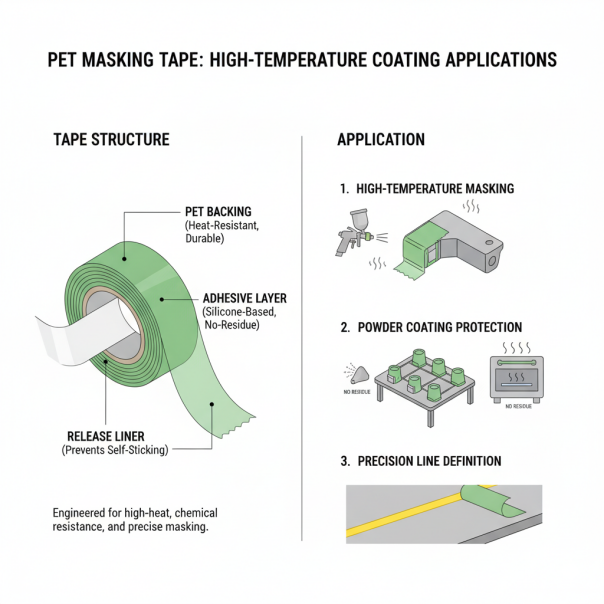
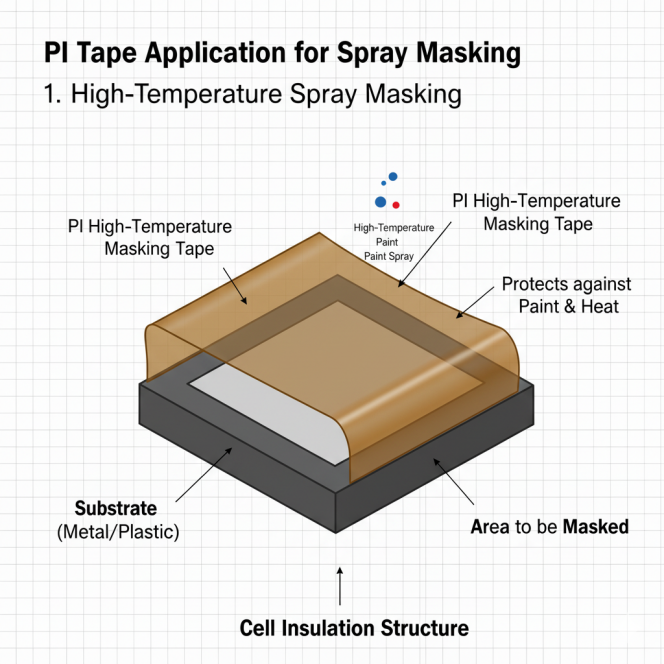
Pet tape offers excellent heat resistance, low thermal shrinkage, high tensile strength, and solvent resistance. It is an essential masking tape for high-temperature spray applications. Additionally, PET exhibits strong adhesion with the adhesive, ensuring no residue is left upon removal. PET tape with conventional acrylic adhesive can withstand temperatures of up to approximately 120°C, making it suitable for many precision high-temperature paint spraying industries, such as automotive manufacturing, aerospace coating masking, and precision electronic housing spraying. Silicone-based PET tape offers significantly improved heat resistance, reaching 150°C or even 180°C. PI tape is an upgraded version of PET tape, with enhanced performance across all properties. However, due to its considerably higher cost compared to PET tape, it is typically used only in extremely demanding spray applications.
Aluminum foil tape is less commonly used in the spray industry but still finds some applications. The excellent heat radiation reflection of aluminum foil helps protect substrates from overheating during masking. It offers outstanding heat resistance and maintains performance without degradation during prolonged spraying tasks. The dense metal structure provides complete protection to the masked surface.
Related Application
-
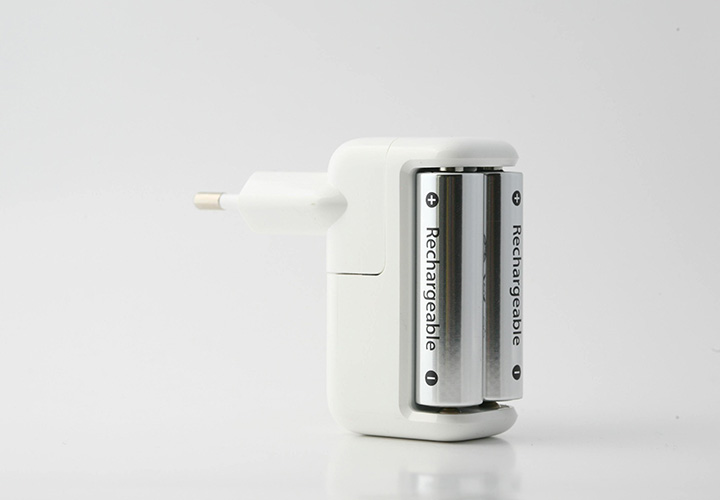 New Energy Battery PacksDuring the operation of new-energy lithium-ion battery packs, significant heat is generated. Therefore, all tapes used internally must possess certain heat resistance, with specific critical areas requiring both high-temperature resistance and flame retardancy.Learn More
 -
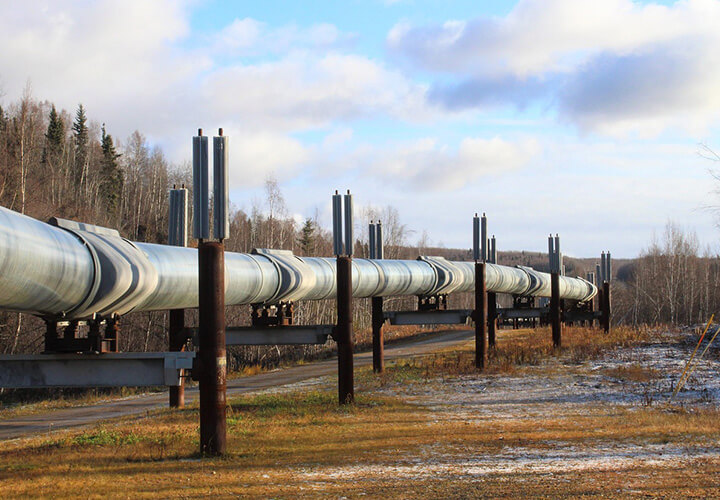 HVAC & Pipe Protection and InsulationIn HVAC and pipeline insulation systems, airtightness, thermal insulation, and moisture resistance are key performance indicators. As an essential auxiliary material for connection, sealing, and reinforcement, tape directly impacts the overall insulation efficiency, airtightness, and safety of the system.Learn More
 -
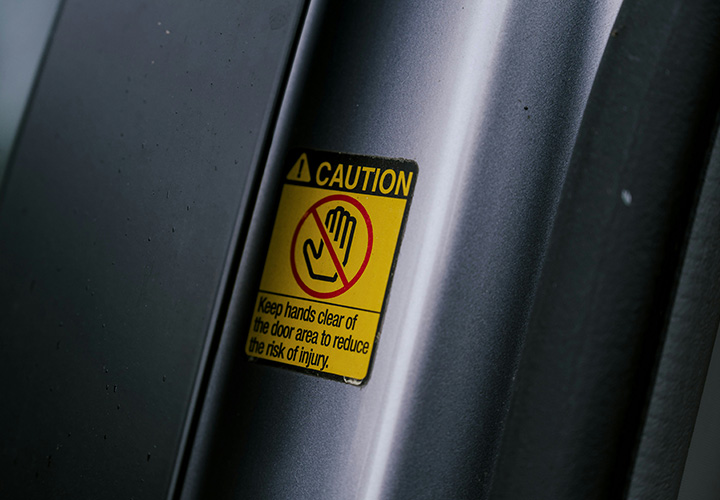 Warning and Anti-counterfeitingTapes perfectly integrate protective functions, information carrying, and tamper-evident properties into a simple, low-cost product, which aligns with the fundamental requirements of the warning and anti-counterfeiting sector.Learn More
 -
 Home Appliance IndustryIn the refrigerator manufacturing process, various types of tapes play indispensable auxiliary roles. Refrigerators are among the most environmentally complex appliances in modern households, with internal conditions including low temperatures...Learn More
 -
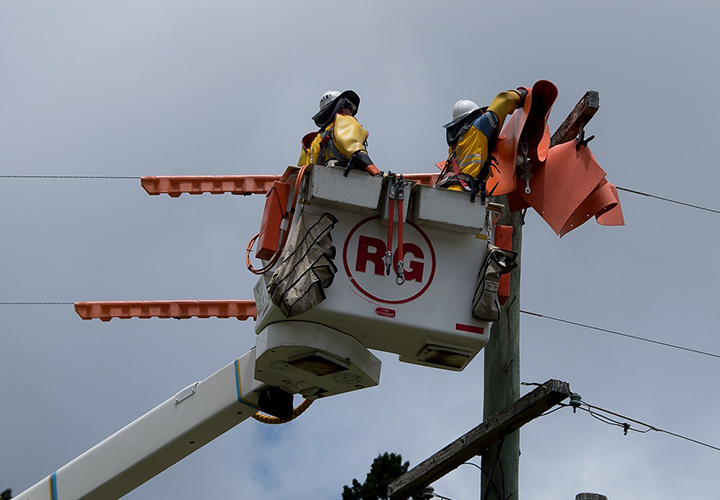 Electrical Insulation ProtectionTape plays an indispensable role in the field of electrical insulation, providing absolute protection. PVC tape exhibits a high dielectric strength, enabling it to withstand high voltages.Learn More
 -
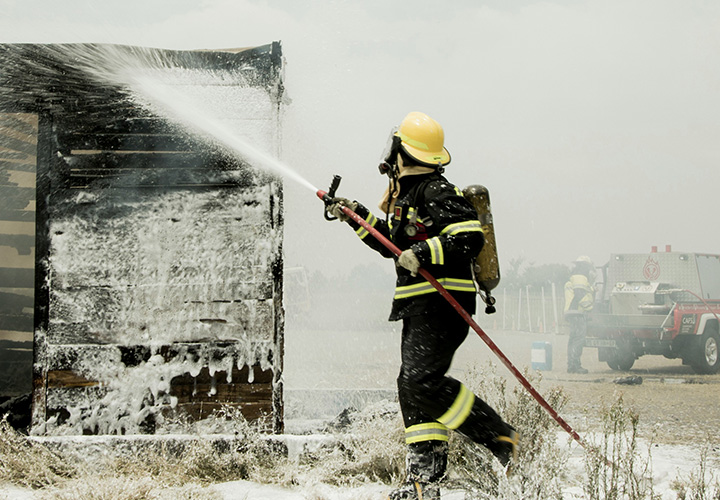 Fire ProtectionLarge-scale infrastructure equipment operates in complex environments with multiple interconnected systems. This necessitates the use of auxiliary structural components with sufficient safety performance to ensure normal equipment operation and the ability to prevent or mitigate incidents under special circumstances. ...Learn More
Respond to Request Prompts within 24 Hours
As an advanced provider of adhesive solutions, Jin Diao Group will be at your service.